
Aspect 01
Urban taxi operations, fully electric from day one
JUNO deploys branded electric fleets in African cities — serving airports, corporate travel, ride-hailing and everyday urban trips through a single platform. High-frequency travel creates the predictable demand that makes charging, clean energy and local service capability viable.

The ride
A new standard for green urban mobility
Every JUNO vehicle is 100% electric, quiet, air-conditioned and consistently presented. Riders get the same experience in every city on the network.
Green Ride
Zero tailpipe emissions on every trip
Safe & Comfort
Vetted drivers, tracked trips, clean cabins
On Time
Dispatch tuned for city traffic and airports
Service network
One platform, four demand channels
Scaling starts where utilisation is highest and payments are reliable, then widens into the general public market.
Ride-hailing & street taxi
App booking, scheduled rides and branded taxi stands with live arrival displays in city centres.
Airport transfer
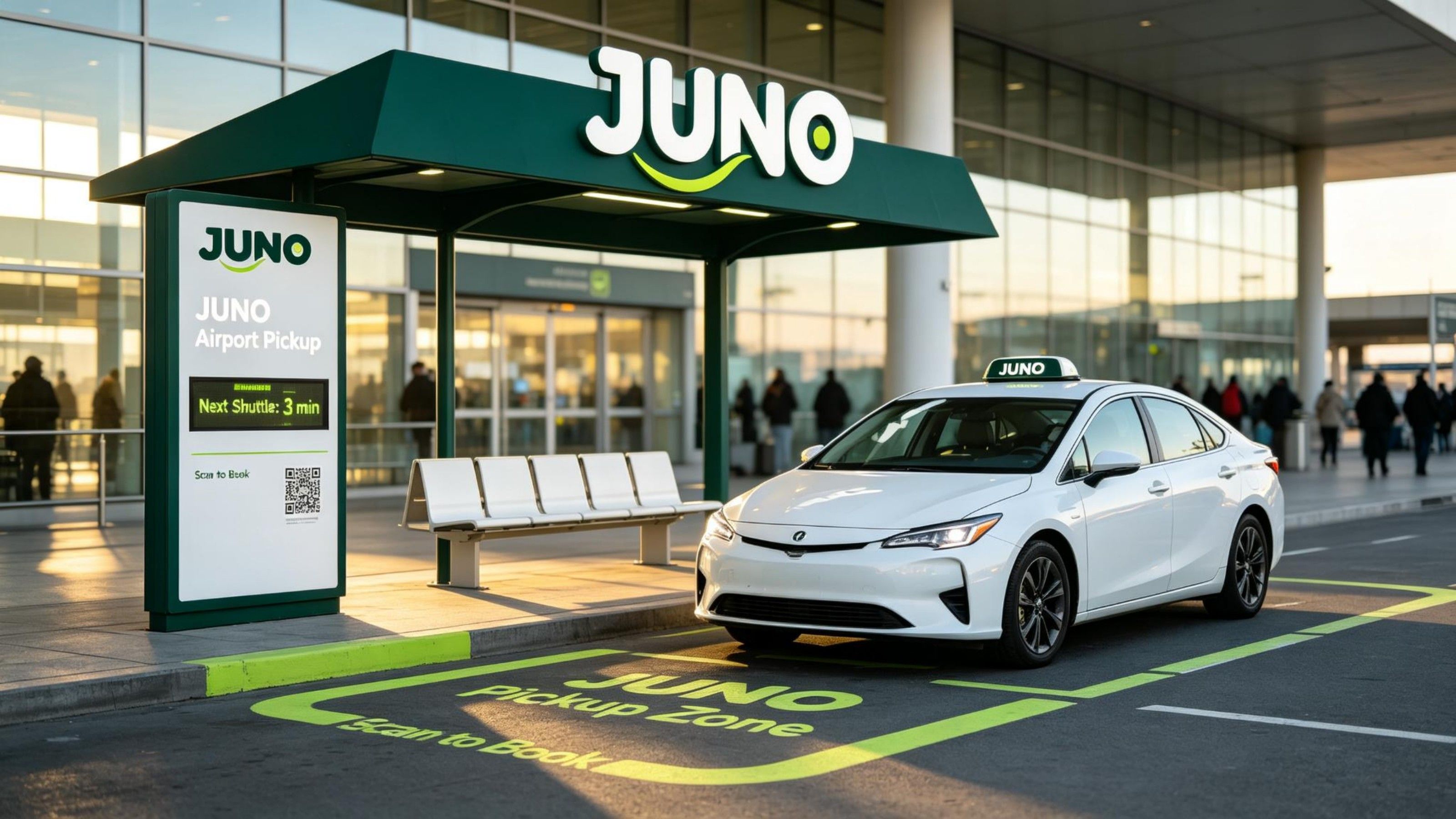
Dedicated JUNO pickup zones and shuttle bays at major airports, with scan-to-book signage.
Corporate & hotel fleets
Contracted travel for companies, hotels and tourism operators with monthly billing and reporting.
Government fleets
Public-sector vehicle replacement pilots that prove total cost of ownership with real operating data.
Drivers
Driver economics built on managed electricity costs
Electricity replaces fuel as the largest daily cost, and training plus local service capability keeps vehicles earning. Drivers see orders, earnings and online hours in one app.
- Certified training pathways for drivers, dispatch and customer-service roles
- Managed charging schedules that keep cost per kilometre predictable
- Local aftersales, spare parts and inspection capacity in each market
- Safety, vetting and trip tracking as standard across the network
How it is measured
Performance reported against jointly agreed measures
Before a pilot begins, government and JUNO agree definitions, baselines and reporting frequency — so service quality and public value are visible, not asserted.
Energy
Energy use per kilometre, charger utilisation and fuel displaced.
Economic
Cost per kilometre, local-procurement share and service coverage.
Employment
Local jobs, certified trainees, women and youth participation.
Service
Vehicle availability, passenger satisfaction and safety events.